
Bravo TV

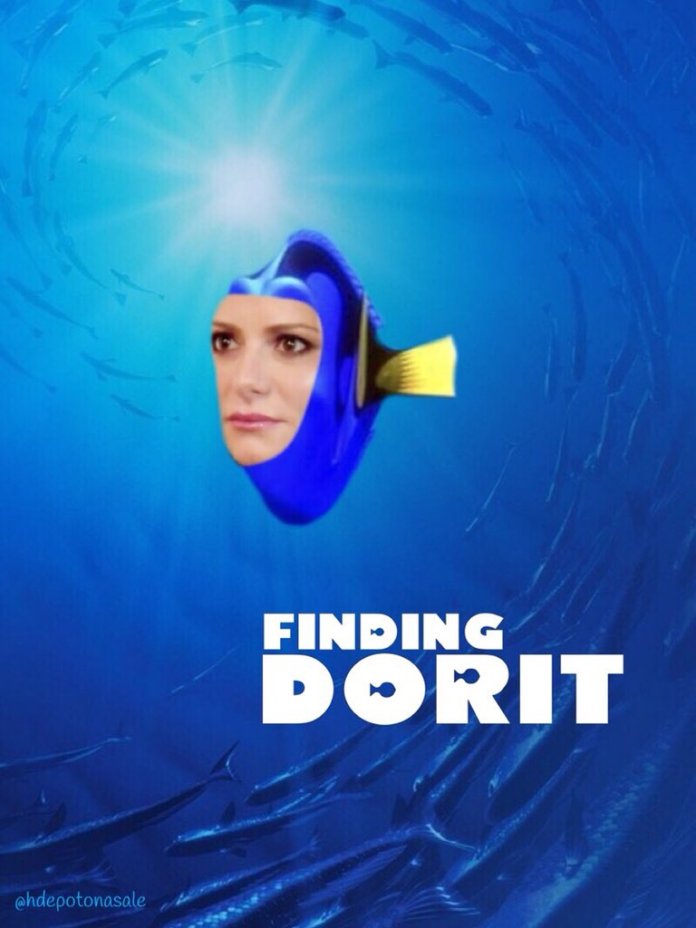
Finding Dorit: The #RHOBH Character Who Has Viewers Talking

finding dorit

I frequently hear complaints that a reality television character is offensively over the top. However, week after week those same folks lamenting are the ones tuning in to the program they gripe about. It is the outlandishness of various cast members that keeps us riveted to shows, despite our efforts to deny that fact. Let’s face it: For a majority of us, without the contrast of these obnoxious personalities we would not be watching — or more precisely, “hate watching.”

Last season on Real Housewives of Beverly Hills, Dorit Kemsley came across as a troublemaker…with a grating quasi-English accent to boot. Arguably, the latter offense maximized the phony vibe this nouveau riche, pretentious and ostentatious Housewife gave off from the start of her Real Housewives tenure. Dorit comes across as privileged, entitled, showy and exceedingly effusive, while at the same time there is something fishy about her and her husband PK. We keep watching as we try to figure out who this person is and what makes her tick, what is authentic versus what is for show. If you fancy yourself a Real Housewives anthropologist or an armchair psychologist, the act of dissecting Dorit…finding Dorit….comes instinctively as she’s a rather baffling character.

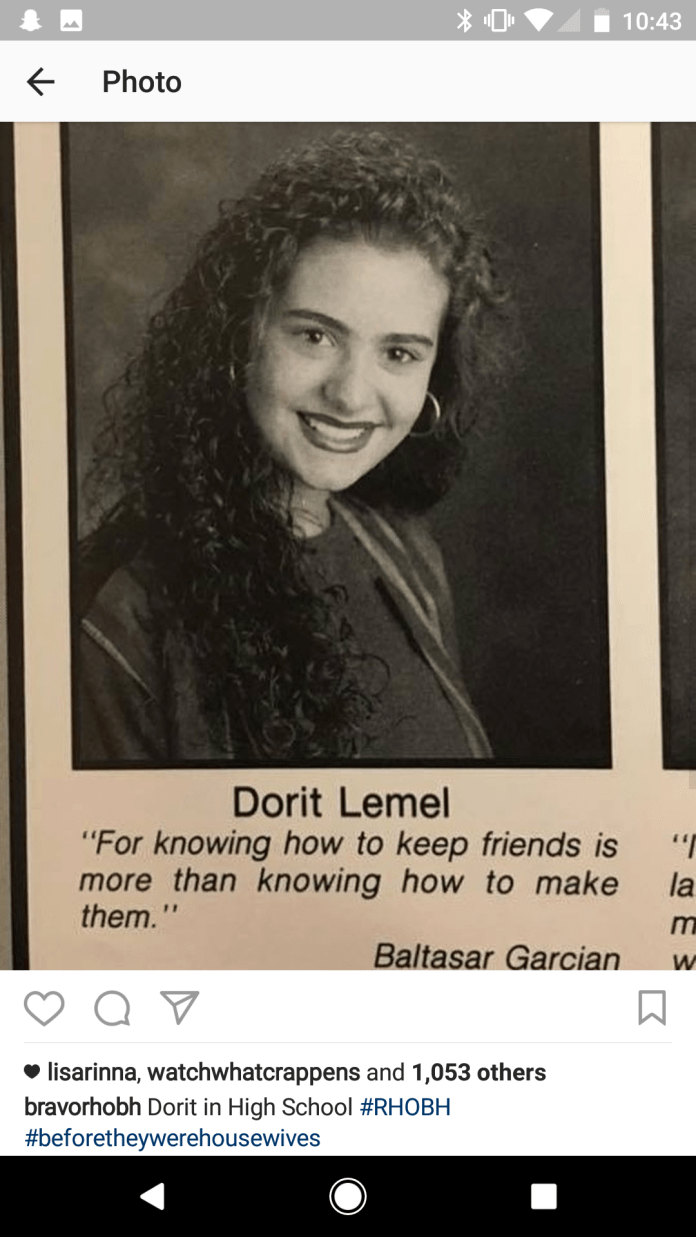
“Isn’t she from Connecticut?” we all asked one another last season, and shortly thereafter, awkward photos from her high school days surfaced. In no time at all, they were circulating widely throughout social media. There she was in the graduation shot from her all-girls school class, 1990s poof curls and that signature reddish brown lipstick that marked its territory (all of our lips) during that decade.
Dorit Lemel high school.png

Dorit’s undying and overboard professions of love for her questionable cad of a husband PK – who looks much older and is noticeably less attractive than his wife – and their taunting of Erika Jayne for unintentionally flashing her undies (AKA “Pantygate) pitted many a RHOBH viewer against her last season. Camille Grammer was once labeled “The Most Hated Housewife” and Real Housewives of New Jersey‘s Siggy Flicker may have LITERALLY taken the cake, but Dorit wore the gold plaited crown on RHOBH. Some viewers have decided that she is the “worst Housewife” in Real Housewives history.

dorit gold leaf hair.jpg

But, she’s pretty.

The many looks, the cakey maquillage, the expensive designer duds, the lavish affairs, the ever-changing hair (about a dozen wigs so far this season alone) combined with absurdity and superficiality…Say what you will, but it all earned Dorit a fawning following last season. If Boy George – who is purportedly managed by PK and inexplicably seems to live with the Kemsleys – can appreciate Dorit, then so can many others. Testament to that is the fact that her Instagram blew up after her inaugural season. For some, there was a certain allure to Dorit and her bloviating manner. Then this year, she returned and turned up the level of brashness full force. Viewers have recently expressed that they’re fed up seeing her gunning for the most stable – and entirely-too-normal – new cast addition Teddi Mellencamp. When the most laid back Housewife was called “psycho” by Dorit, viewers expressed that she had surely lost her marbles.

The question with Dorit is: How far is too far? How much will RHOBH fans be able to tolerate? Viewers seem to have sharpened the focus even more upon hate-watching the Housewife this season. Some have even begged Bravo (via the various social media channels that exist) to fire her.

Based on what we are seeing of Dorit this season, many of us have questions:

Is that indeterminate accent a put-on? Or is it the sort that was legitimately acquired from being married to a Brit and exposed to his diction day after day?

Does Dorit always act as if she hasn’t seen her children in over a decade? Why does she prance them around in front of her friends as if they’re show ponies before a live audience?

What exactly does PK Kemsley do (besides manage singer Boy George – although maybe that is enough?)? More specifically, how does the couple afford their sprawling mansion?

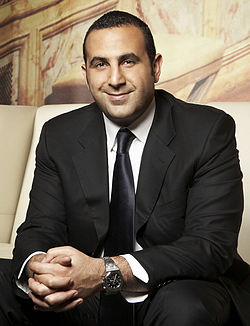
There have been allegations that the house we see them in actually belongs to businessman, investor and philanthropist Sam Nazarian. What we do know is that the mansion is on the market, currently listed with Mauricio Umansky’s real estate company. https://pagesix.com/2018/01/16/dorit-and-pk-drop-mega-mansion-listing-price-by-1-8m/ Is it merely a salacious rumor about Nazarian owning the house, or is it fact? In short, viewers wonder: How much about the Kemsleys is a facade and how much of the glamor and glitz is reality beyond “reality TV”?
Sam Nazarian

WIKIPEDIA, Sam Nazarian

Erin Martin, a writer for Reality Tea and host of the Pink Shade podcast says that Dorit reminds her of former RHOC Alexis Bellino, just “a smarter version, with a British accent and bad wigs.” Martin further elaborates: “Like Dorit, Alexis was totally fake with HUGE boobs and had a gross husband like PK. She and her husband both turned out to be lying about their financial status the entire time. They were broke and were renting everything they showed off. This is very much like what has been alleged to be the case with Dorit and PK.”

erin martin twitter

TWITTER, Erin Leah Martin

Then there is the question of: Is Dorit for real when she makes a big deal? We see it this season when she makes a whole stink about the cup from which she takes a drink. We want to shove each glass up her….

And as you know from the show, there’s one for wine, another for champagne, one for red that should never be utilized for rosé…and so on….

wine glass dorit

BRAVO TV, “The fact that I know a wine glass from a champagne glass is etiquette,” Dorit told Teddi in an earlier episode of RHOBH, “Sorry, I know it.”

Dorit is a very particular woman and she makes her preferences and thoughts known without much filtering. After all, she was responsible for making last season’s “Pantygate” a huge debacle, and this season, the focus seems to be on “Lategate.” Her costar Teddi Mellencamp was miffed that she arrived an hour after their scheduled meeting time, but Dorit is the one who refuses to let Teddi’s annoyance with her go. She remains unapologetic for her tardiness, claiming instead that Teddi is uptight.

Danny Pellegrino, host of the podcast Everything Iconic with Danny Pellegrino had this to say about the Dorit of last season and the Dorit we’re seeing now:

Danny Pellegrino

FACEBOOK, Danny Pellegrino

Dorit didn’t impress me much on her first season of RHOBH, and she’s not impressing me now. The problem, I think, is that she is a solid ensemble player, but she has become the star and villain of the show in her second season. I don’t think it’s necessarily her fault that the storylines have revolved around her. Unfortunately, I don’t think the other women gave enough for production to latch onto, and it’s forced Dorit to take center stage. These shows are soap operas, and every good soap opera needs a villain. Dorit has taken on that role, but she’s not a strong enough villain for us to root against (or for, if you love the drama a villain brings).”

“Because of that, she ends up coming across as simply annoying, like a discarded Batman villain. If the show had a stronger villain, someone like Brandi Glanville or season 1 Camille, I think it would come across better because the audience wouldn’t be relying on her to drive the story as much as we are now. Lisa Rinna seems to want to take a backseat this season after spending so much time filling that role previously, and Lisa Vanderpump  and Kyle are coasting by on their seniority. The tardiness storyline that is driving this season is so incredibly weak for a series that has dealt with domestic abuse, alcohol addiction, squabbling sisters… In another season, that storyline would be a great little B-story that audiences would love because it would be campy, over-the-top and the right amount of ridiculousness. Unfortunately, Dorit being tardy has become the A-story of the season, it’s leaving viewers upset and it’s hard to point the finger at anyone but Dorit since she’s the tardy one. “

“The one thing I do really appreciate from Dorit is her fashions. Her choices range from ridiculous to flawless in any given scene. Even if you don’t like her, it’s fun to see what she’ll be wearing, and that’s not something you can say about any of the other Housewives, save for maybe Erika. I hope for Dorit’s sake that someone else (or multiple people) step up next season to drive the storylines so that we can appreciate Dorit in smaller doses than what they are giving us now. As is, I think a lot of us are rooting for Dorit to get off our screens so we can get some more meat in the drama. It is entirely possible that Bravo is looking to move away from that type of show, and giving us more lifestyle porn with tiny bits of drama, instead of dramatic catfights and table flipping. If that’s the case, I think it will turn off a lot of fans. Lastly, I think we can all do without PK entirely. I think all fans are in favor of him appearing even less than Mr. Girardi.”

The 80s icon and famous pop star Boy George recently chastised an Instagram user for not being able to appreciate a campy woman. Is that where many of us are going wrong with regard to Dorit? While some viewers have stated that they can’t wait for her to leave the show already, I’ve referred to this season as “The Real Filler Scenes of Beverly Hills” and feel that Dorit spices up an otherwise boring show. I have not been able to identify many “storylines” since the current season began.

So, even as Dorit offends and irks, I feel she is delivering necessary drama through her erratic and mind-boggling antics. There is no denying that her questionable behavior has fans talking, tweeting and weighing in…albeit, to their own chagrin. I’m not sure where we would be without her, or who would still be watching if she wasn’t on our screens.


https://www.instagram.com/p/BfCQGMkA9_w/?taken-by=realhousehomo


Standard
Judaism, Religion

He’s Just Not That Into Your God: Jewish Conversion and Relationships

conversion collage

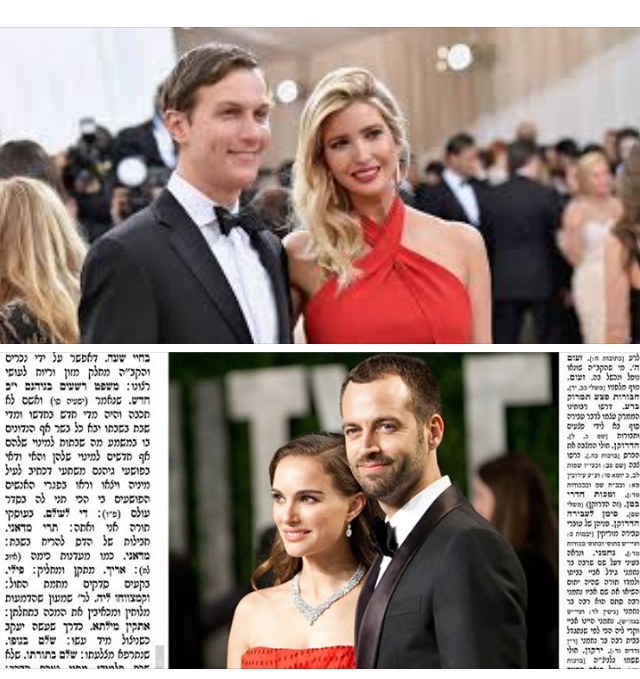
TIMES OF ISRAEL, TABLET MAGAZINE, These couples each have a converted member among them, but it’s not always so easy to commit oneself to Judaism.

It took only three words for my friend Karen to lose her breath, plunging into serious hyperventilation mode.
“I don’t know,” said Jeff.

Her extremities began to tingle. “What … do … you … mean … YOU … DON’T … KNOW?”

“I don’t think I can go through with the conversion,” he said, squarely looking her in the eye. For a flicker of a moment, she thought she heard the word “conversation,” but there it was: the weightier C word.

Two years earlier, Karen and Jeff, both in their late 20s, had met through work acquaintances. The attraction was instantaneous, as was their connection. To Karen, who had been raised in a Modern Orthodox Jewish home, her religion was an absolute. To Jeff, it was a part of Karen, whom he loved. He began to fervently explore her religion and truly became interested in studying the Torah. He began to know many of the laws and texts better than Karen did from her years in religious schools. However, as all who are familiar with Orthodox Jewish conversions can attest to, the process is deliberately a difficult one.

“Becoming part of the Jewish people is a serious matter,” says Rabbi Shlomo Slatkin, MS, LCPC and Certified Imago Relationship Therapist. Rabbi Slatkin, aka “The Relationship Rabbi,” spends his days counseling couples. “Even for those who are born Jewish, it is a life-long endeavor learning how to live as a Jew. The conversion process is deliberately difficult because we need to make sure that the prospective convert is sincere about this complete transformation.”

Slatkin explains that a convert is considered like a newborn baby, born anew and with a new soul. “We want to make sure that a prospective convert understands this and realizes that they can remain a non-Jew and still merit the world to come if they live a righteous life. Becoming a Jew is an awesome responsibility and we want to make sure that they are prepared for this.”

Jeff sat down to learn several times a week with a rabbi. Several times a week his intentions were questioned by members of Karen’s community. And several times a week, Jeff’s shell cracked a little, then a little bit more. His work schedule began to be affected and his relationship suddenly seemed to require more effort: He was regularly defending his zeal for Judaism it seemed to Karen’s and her parents’ acquaintances. Since Karen wasn’t one of those girls who regularly raved about her own religious beliefs, a drop of doubt fell for Jeff. The drop became a rivulet.

“Interfaith relationships, as well as relationships in which one is more passionate about the same religion than the other [i.e. one is Orthodox Jewish, the other is Jewish but not at all religious], are extremely complicated,” says Dr. Fran Walfish, child and family psychotherapist and author of “The Self-Aware Parent.” “[Those types of relationships] need careful exploration and discussion prior to marriage and children. A detailed dialogue about how each one wants to raise their future children should take place early in the relationship. Both individuals need to be close to center, rather than polarized or extreme in their religious practices and beliefs. If one is to the right, then many complex challenges arise that include where the kids will go to school, will they be baptized or bar mitzvahed, how to celebrate holidays, attendance at church or synagogue — not to mention in-laws and extended family pressures.”

Dr. Walfish goes on to say, “All this said, I have treated couples in which both were close to center at the onset of the relationship. After marriage, when a baby was born, one in a couple that I was counseling became more attached to her religion. She enrolled her child in a Catholic school behind her Jewish husband’s back and against earlier commitment to public education for their kids. Although the husband could eventually forgive her, no one could sway the wife to return to her earlier, middle-of-the-road commitment. It was a deal-breaker for the marriage that sadly ended in divorce.”

Rabbi Slatkin, who sees many Jewish couples in his practice, says that even though these couples are not interfaith, the religious disparity can be enough to cause major tensions. He does not recommend that people initially get involved in a relationship where one person is Orthodox, for example, and the other is not. There are enough religious issues that can arise with Orthodox couples alone, he explains, “especially where one is more ‘into it’ than the other. To get into a situation that will add another layer of conflict would not be wise. Keeping a kosher home, Shabbos, the laws of family purity, sending to Jewish day schools, at a minimum is a major lifestyle difference. If one person is not interested in these things, it will be very challenging.”

Rabbi Slatkin adds that this is not to say it can’t be done, but that to enter into a relationship with these types of issues from the start is precarious. “I do not believe in forcing people to change as it only leads to resentment,” he says, “If one gets married thinking the other will change or be OK with things, it won’t happen. When we fall in love, we say a lot of things. Once we get married and the inevitable power struggle arises, these issues may become a bone of contention.” For those already in relationships of this sort, Rabbi Slatkin says that it is possible for the relationships to work if both are committed to open discussions and learning how to understand one another. “I don’t advise looking for such a relationship in the first place,” he adds.

Jeff and Karen are not together today. After much heartache, a few breakups and attempts to reunite, they both found new partners and moved on. But did they really? When I speak to Karen, who no longer speaks to Jeff, but stayed in touch with him for several years after their breakup, she says that a part of her will always love Jeff…

…and a part of Jeff will always love Judaism.

Standard
Moms, Psychology

SH*T People Say To Pregnant Women

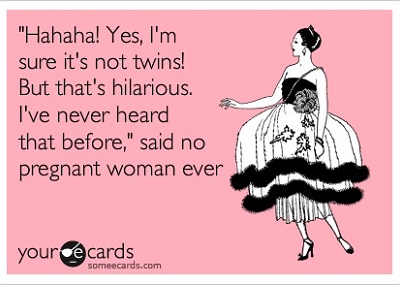
twins not twins

I was recently on the Buttered Pop podcast to recap an episode of the wildly popular Bravo show Vanderpump Rules. While there are no pregnant characters on the show… yet, there was a story-line about a character receiving unsolicited comments on her body from another (male) character. While delving into this with the podcast host Armin Mahramzadeh, he and I discussed the concept of a man weighing in to criticize and heavily scrutinize a woman’s body. We wondered if 2018 would finally be the year for men to take a second look at this habitual and (also unfortunately) historic behavior,  realizing how wrong it is to issue these types of intrusive remarks.

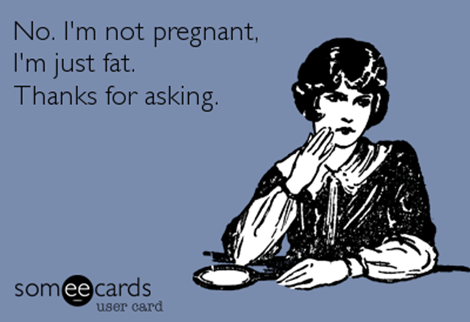
pregnant fat

Even men who profess to be feminists and to understand women, should think before making a nasty barb about the female bod…

Because guess what, men? You are men. Whether you are gay or straight, single or in a relationship, live with a woman or do not: You have no firsthand understanding of the female anatomy, hormones and related weight fluctuations like someone with an actual female body has. Often enough, you’ve exhibited that you have no concept of what a realistic female body type is, what is desirable versus what is achievable.

I feel the above frustrations as a woman and I also remember feeling a great deal of annoyance – amplified by overwhelming surges in hormones – when I was pregnant.

Until I actually started to show during my first pregnancy, I had no idea that that time period in my life would open the floodgates to all sorts of unsolicited commentary. It boggled my mind then that folks felt they had license to issue all sorts of rude and tasteless insults to the most hormonal people on the planet, expecting it to roll right off their backs. With the subsequent two pregnancies, I still remained aghast though perhaps, I was a bit prepared. Otherwise, pregnancy is a blessing and having gone the fertility route to achieve a sustainable pregnancy, I felt super thankful and appreciative to even have this time to complain…..Still, the sorts of things that people will say – I will never forget some of those comments!

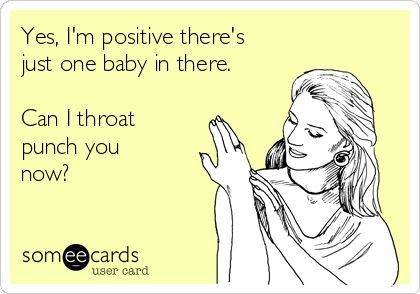
just one baby

In retrospect, I can laugh at the ridiculousness, but in the moment, I really just wanted to school people on the things they shouldn’t be saying.

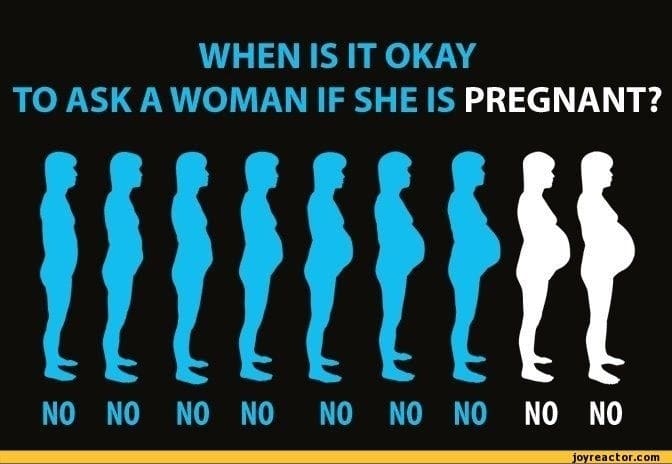
Can you imagine if  I walked over to a man and said “Oh my God, you are so fucking bald! What happened to all of your hair?” Something tells me it wouldn’t go over well at all, that it would be seriously shocking and be perceived as terribly inappropriate. So the fact that it is far less shocking to tell a  woman “You are huge!” while staring at her belly (pregnant or not, because people never cease to amaze me) is appalling.

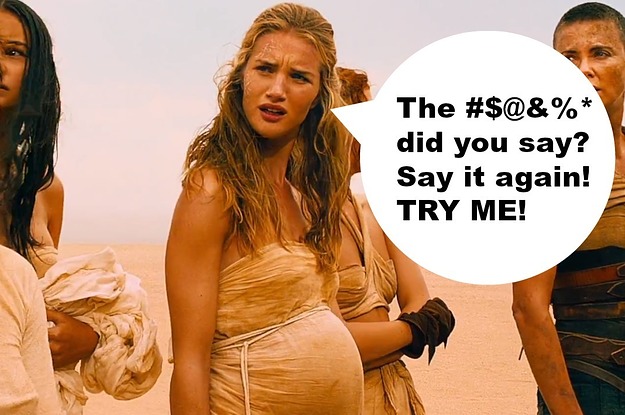
when is it ok pregnant

BUZZFEED

My experience with pregnancy – three times- is what inspired me to write a little skit that was performed in an Off Broadway production a few years ago under the directorship of Aliza Shane and the 3V Theater company.

big isnt compliment pregnancy

PINTEREST

Without further adieu, I present you with “Sh*t People Say to Pregnant Women” and perhaps after you read it, you’ll remember to insert your own pregnant pauses into conversations about women’s bodies:

“Are you seriously eating that?”

“Are you going to eat ALL that?!”

“I never ate that much when I was pregnant…”

[Laughing and pointing] “Talk about ‘eating for two’!”

“You know that you don’t really need to’ eat for two.’ The baby is the size of a lima bean.”

“YOU are going to gain so…much…WEIGHT!”

“Oh wow, [slaps head] you’re pregnant! I thought you just got fat.”

“Your nose has gotten wider; you must be having a girl!”

“Your nose has gotten wider; you must be having a boy!”

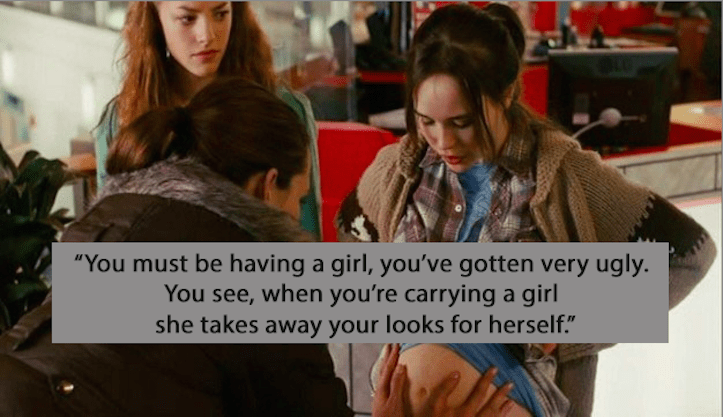
“You must be having a girl. Girls suck out all your beauty…”

“Don’t you love how now you can just let yourself go and eat whatever you want?”

“Oh, no wonder you’re letting yourself go!”

“No wonder you’re eating so much!”

“Oh, you’re showing early because you’re so skinny.”

“My other friend who’s pregnant didn’t show as early because SHE’S thin.”

“I wasn’t sure it was a PREGNANT belly. I thought it might just be a MARRIED belly.”

“Oh, I knew it! I just knew it! I knew it before you told me!”

“I thought your face was getting a little fat.”

“I noticed your boobs were looking bigger.”

“Oh, phew, I really was wondering why you were suddenly getting so chunky.”

“Ohhhh. Can I touch it?”

“Should you be eating that?”

“Should you be drinking that?”

“You know you shouldn’t be eating that.”

“You SURE you’re not having twins?”

“Twins? You are going to BURST!”

“One’s gotta be hiding behind another. That happened to my mother’s sister’s cousin-in-law’s best friend’s aunt’s daughter.”

[Whispers confidentially] “Could it be triplets?”

“Well, it definitely has to be twins! You’re too big to be carrying only one. I don’t believe you…”

“You’re too small. Are you sure you’re eating enough?”

“I don’t care what your Doctor says, I KNOW you’re having twins!”

“You’re HUGE! …oh, it’s twins? [Nervously] you’re really carrying small. I hope the babies are ok.”

“Are you taking folic acid?”

“Are you taking your prenatal vitamin?”

“Natural or IVF?”

“Wow, you got pregnant fast at your age!”

“I guess your eggs weren’t fried after all, girl!”

“Wow, so close to your last baby?!”

“Weren’t you JUST pregnant?”

“Didn’t you just get married?”

“Don’t you believe in birth control?”

“What’s the rush?”

“Was this planned or…a surprise?”

“You’re having a baby?… I am so NOT a ‘kids person’!”

“Oh, I so hope it’s a girl since you already have a boy!”

“Will you be disappointed if it’s ANOTHER boy?”

“Are you finding out what you’re having?”

“Are you keeping it?”

Standard
Psychology

The Things You Wouldn’t Say (Someone Else Will)

pregnant comeback pinterest

PINTEREST

(Originally published 1/4/12 on The Huffington Post.)

One of my earliest memories involves a cringe-worthy moment for my mother, when I turned to a tall burly man in a Bronx elevator and said “You shouldn’t smoke, it’s bad for you.” While it is likely true, it’s not something I would now say to a perfect stranger. I remember my mother’s anxiously polite response (as well as the man’s), the jaw-splitting smiles, the chirpy laughter, her trying to cover up for the brash 4-year-old that I was.

… I was cute enough to get away with it then.

spinach salad

FAB AFTER FORTY – TUMBLR

Cut to the present day… I’ve noticed that some of my acquaintances choose words carefully while others seem to have what is known as “no filter.” It is far less adorable. The things you wouldn’t say….well, very often, someone else will.

When I was pregnant several years ago, a neighbor approached me at the community rec center and loudly proclaimed “You’re gonna bust right out of that T-shirt. You sure you should be that big for just five months pregnant?” When I informed her I was actually carrying twins, she scolded me repeatedly for being too small.

While I contemplated launching a maternity line with witty comebacks (e.g., “MYOB: Mind Your Own Belly” and “Hands off!”), I saw how free people were to say things with no foresight about what might be hurtful and highly annoying.

Words that could potentially put Kleenex out of business (if you’ve ever been pregnant, I know you know what I’m saying) are often the result of cranial overload-induced verbal diarrhea.

Fab After Forty Tumblr

FAB OVER FORTY – TUMBLR

On the other hand, it is not always possible to predict what might be hurtful to others. That which one person hears as a teasing tune of a flute may arrive as the clash of cymbals to the recipient’s ears.

A few years ago, I upset a friend, a fellow mom of twins, by sharing a dream I had about her. I had no idea she was desperately trying to get pregnant again and had just suffered an unexpected miscarriage when I informed her I had dreamed she was pregnant. We’ve all inadvertently upset someone by saying something we thought nothing of.  There’s no way to go through life offense-free, but I would say that if you have an inkling of doubt, take out that filter. Try to separate the wheat from the chaff. Let your mind do the thinking before your mouth does the talking.

fab after forty Tublr 2

Standard
Religion

My Golden Mean: Reflecting on a Year of Religion-Related Ruminations

It was a good question and one that recapped a very confusing year of my life. For 24 years I had been an observant, modern orthodox Jew, always questioning yet accepting that not all my questions would be answered in a way that was clear to me. I was content in my tight-knit community until I felt the community turn on me. At 25, I had met a 30-year-old lawyer and my friends in the orthodox Jewish community of Upper West Side Manhattan did not approve of the match, or the fact that he had previously dated someone else in our circle. My synagogue became an unsettling place and I was the recipient of many dirty looks. I stopped going.


When I had first started dating the charming lawyer, I knew he was trouble and literally a “bad boy” but he was hilarious, captivating, intelligent and cultured in a way that the other boys I was meeting were not. Totally under his spell, we began spending a lot of time together. I knew he wasn’t Mr. Right with his inexplicable outbursts from time to time (i.e. getting enraged that I had confused Flushing and Forest Hills) but I was definitely stuck in the Right Now. I also felt trapped: I did not have my old Upper West Side “community” of friends to go back to. Although this new boyfriend was Jewish, he wasn’t at all religious, and slowly, I began to wonder how much I cared about being orthodox, how much of what I had done I believed and how much had to do with routine.

But I was lonely. I had been a part of something for so long and now, it seemed I was out in the world with doubts and no place to go. I found comfort with my family but I was scared to tell them all that I was questioning. I remembered something that I had learned in school about what the Jewish philosopher Maimonides said: The ideal is the Shvil Hazahav, the Golden Mean or optimal middle path. He said that when it comes to character traits, extreme is never the way to go. Growing up as a modern orthodox Jew, my friends and family always referred to people who were “to the left,” “to the right” or “in the middle,” but each person had a different definition of those categories. They were entirely subjective. Maimonides said you needed to be in the middle and that too was open to interpretation.

During Rosh Hashanah, I am thinking about my relationship with the lawyer, my relationship with the community, and my relationship with God. In my own mind, I was now bordering on agnostic and for me personally, that was too far “to the left.” I needed to get to my Golden Mean. It wouldn’t be where I had started, gone was the complacency to accept without question. It also wouldn’t be where I had recently found myself — completely lost.

A week before the high holidays, I decided to sign up for a spiritual retreat where mainly Jews who are looking to become orthodox go. I was a rarity there being an FFB — a Frum (Yiddish for “orthodox”) From Birth — but I went for one reason: to see the beauty in Jewish people, orthodox and non-orthodox alike. I went to see the fire, the passion that I remembered had inspired me in the past, and that had excited me so much about the Jewish people.

And I saw it there. I also learned… and learned. I met orthodox rabbis who embraced Jews of many walks of life, rabbis who didn’t scoff or undermine questions about liberal issues, rabbis who had clear answers to the very questions I had deemed unanswerable. And I met Jews who were eclectic, open-minded and warm, Jews who were straight and Jews who were gay. Everyone was embraced on this retreat. Like me, everybody on this retreat was longing… for a community.

When I got back, the lawyer continued treating me badly but I strengthened my resolve to break up with him. I was not trapped and I did not have to go back to the group that had snubbed me. There were other observant Jewish people that I could associate with who were warm, like girls I had known in high school. There were observant Jews, “Landsmen” who had helped me find Shabbat meals in foreign countries. There were observant Jews — perfect strangers — who had embraced me and welcomed me into their homes. There were others who had taken an interest in me and had set me up on dates. There was so much more that my community had to offer, more than cliquey women in a synagogue who didn’t know me but had decided to hate based on hearsay.

I broke up with the boyfriend and remembered something else that I had heard about the Golden Mean: Sometimes you have to hit the opposite extreme in order to reach the middle.

Had I reached “the opposite extreme?”

Well, it was subjective, but for me, yes, I had. In the back of my mind I had always believed in God, but for the past year, I had been out of touch. As I thought about the concept of Teshuva (repentence), an intrinsic part of Rosh Hashana and the high holidays, I knew what I had to do. I gradually began to pray — not the traditional prayers of the religious Jewish people, but prayers said in my own words. It was strange for me as I had always prayed in Hebrew (and truth be told, hadn’t always understood all of what I was saying). Just like I didn’t necessarily believe that He wore a yarmulke (I had always pictured George Burns laughing down on me), I didn’t think he would not accept my prayers because they were in English. I turned to this God for strength and guidance as I slowly returned to my community and made new friends.

Standard