Uncategorized

Watch What Happens to the Fourth Wall: Bravo TV’s Continuing Challenge

 This article was originally published on Huffington Post in July of 2017.

FERRIS BUELLER’S DAY OFF, HOLLYWOOD REPORTER
This is not Ferris Bueller’s Day Off, Andy Cohen is not all about breaking that 4th wall

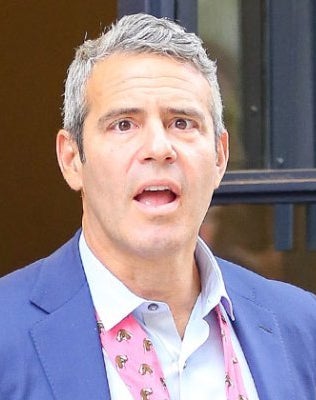
When Andy Cohen is caught entirely off guard, things shut down…

Whether it be the extenuation of a Real Housewife’s TV tenure, the hurling of unlawful insults at a reunion, or calls to the Watch What Happens Live phone lines.

A highly entertaining Atlanta Housewife was allegedly fired for perpetuating a rape story about her costar last season. In 2016, Andy halted calls to WWHL when an OC Housewife was grilled about a salacious storyline NOT seen on TV. It is in those moments when Andy looks taken aback and quiets the drama (something he’s otherwise known for delighting in) that we know the “fourth wall” has been broken. Not just broken, but broken in a way that’s been deemed as far too damaging.

This is not a part of the show, nor is it something we ever want to air, Andy’s expression reads.


RADAR ONLINE
Bravo’s Andy Cohen looking surprised


The threat of legal action is obviously a huge blow to what has been packaged neatly into a franchise. so it’s unsurprising when this type of development affects what ultimately airs. On the flip side of this type of scenario is the adamant expressions of naivete by cast members. While it seems impossible for some of the newer ones to not have heard of their more famous cast mates – the Bravolebrities – on TV we see people who seem unfamiliar with or unfazed by the notoriety.

On the reunion shows at the end of seasons, some of the new Housewives will come clean: “I watched the show beforehand” or “I didn’t watch the show, but crammed last season’s episodes when I knew I’d be on.” When cast members claim to not have seen the show at all, we’re instantly skeptical of them. However, professing ignorance is the ultimate act of not breaking the fourth wall. It’s one method of getting into character as the latest addition to a group of “friends” (if only friends for the duration of filming).

BRAVO TV
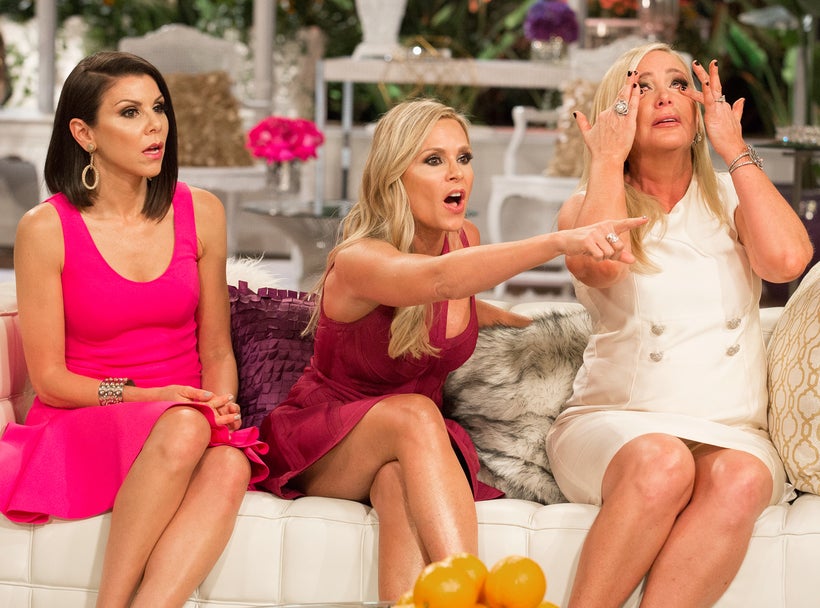
oh, the drama of (RHOC) reunions past!

ALL ABOUT THE TEA
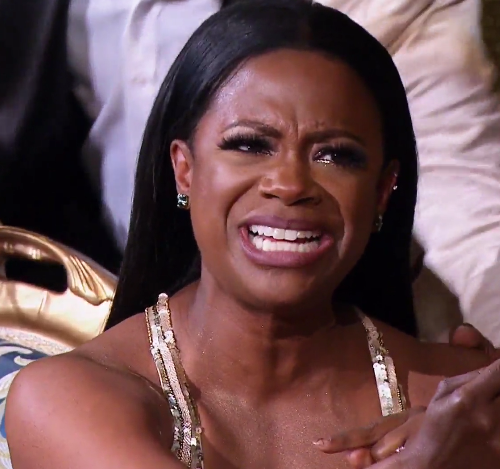
Kandi Buruss at last season’s heated RHOA reunion.

When veteran Housewife Vicki Gunvalson (Real Housewives of Orange County) helped her ex Brooks fake cancer (yes, that happened!) Bravo viewers were intent on busting him, aiding Vicki’s cast mate Meghan King Edmonds who was already making calls to the imaging center he claimed to have visited.

The center had to issue a statement after being inundated with calls from RHOC fans who couldn’t help blurring the lines between TV and reality. In their defense, regardless of the cameras, a real person was faking a real illness. Though Vicki would prove to be complicit in the fake cancer storyline, she is still a Housewife today despite cacophonous viewer demand that she be removed from the show. Don’t get me wrong: Vicki, the “OG Housewife” from the very first season of all Real Housewives shows, also had vociferous support from die-hard fans who stand by her no matter what.


BRAVO TV
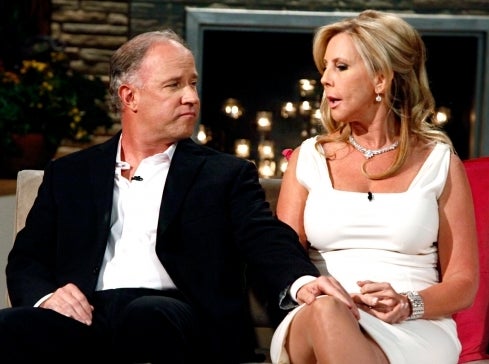
Brooks Ayars and Vicki Gunvalson


Despite their act of blowing up phone lines at a medical facility, fans were not acknowledged on RHOC the following season. Nor will they ever be. The same goes for callers to WWHL and carryover to any Bravo show. Their accounts may bring sizzling details, but Bravo is interested in getting their own story. On the other hand, the Housewives will often respond to a story that is brought up by bloggers while mitigating how the rumors began and directly addressing cast mates instead of authors. The idea is that the general public wants to watch a group of housewives interacting in a “natural” setting rather than Housewives changed by fame and the public’s reaction to “reality stars.”

Viewers are the unsung heroes and the meddlesome unmentionables. In online forums, their theories and story leads fuel discussion and speculation. However, the answers to their questions and affirmations to the validity of rumors may or may not come while watching the TV shows…

Andy Cohen makes sure to patch the wall each time its foundation cracks.


METROSOURCE, PHOTO BY SMALLZ & RASKIND/BRAVO
Standard
Uncategorized

#ItGetsBetter Isn’t Getting Old: Famous Voices Bolster the Message

dr phil

DrPhil.com

(This article ran on Huffpo in 2011)

“Getting picked on in school sticks with you for life.”

Those were Lady Gaga’s words during a May 23rd appearance on The View, but they could have been mine. They could have been yours. Heartbreakingly, they could be your child’s, which is why, says Jill Zarin of Bravo’s Real Housewives of New York City, it is crucial we communicate with our kids.

“Closed doors aren’t allowed,” says Zarin, who is both a mother and stepmother. She tells me I “must Google Gaga” and just like that — like she does with Kelly, Sonya, Luann, Cindy, Alex and (even) Ramona — she’s giving me advice. Later on, I will research Stefani Joanne Angelina Germanotta (AKA Gaga) at length to discover that through music lyrics and interviews she has opened up about bullying in her past.

“You have to be involved today,” Zarin stresses, “You have to break into your children’s Facebook and Twitter. As long as they’re living in your house — it doesn’t matter what other people say. My heart broke for Gaga. What she said really hit a nerve because I saw myself in her and I saw… it was real.”

Thirteen-year-old Sara Edelman says that the message seems more powerful coming from Gaga because “She’s big and people idolize her. It helps much more to hear from someone that we look up to than the average person, to know that someone that successful has been through it and come out the way that she has.” Gabriella Hagler, 12, agrees that a video with a message about bullying from an internationally renowned pop star holds more sway than one from, say, me.

Dr. Phil, who has covered the topic of bullying on several episodes of his hit TV talk show, tells me “Celebrity voices are necessary but not sufficient. When folks that young people look up to take a strong position that it’s not cool to bully, it has a positive affect. I think it’s terrific, but it’s got to go much further and be part of the curriculum (in schools).” (See sidebar for more on bullying from Dr. Phil).

Michael Blumberg, LCPC, who has recently counseled bullies and bully victims alike in the Chicago suburbs, is not surprised by young Sara Edelman’s words. “Celebrities are idealized and appear to have it all,” he explains, “so when they discuss being bullied we realize the scope and severity of the problem and are able to identify and connect with them.”

Back on The View, Gaga talks about how her lyrics, like those of “Born this way,” aim to liberate fans. “They said I had a big nose, I had buck teeth. I got thrown in the trash can on the corner… I don’t think I realized how deeply it affected me until I started to become more successful.”

Watch What Happens Live With Andy Cohen - Season 14

Zarin tells me that like Gaga, she too was bullied during her youth. In fact, in her 2010 book Secrets of a Jewish Mother (co-authored by her mom Gloria Kamen and her sister Lisa Wexler), a chapter is entirely devoted to the subject of bullying.

“I sent a message to Gaga after hearing those words,” she tells me, “I reached out to her and said ‘If you face your bullies today, invite them to your concert. If you face them, then it’s nothing.’”

Zarin still has nightmares from those days, but in recent years, former tormentors have gotten in touch. “They don’t remember bullying me,” she marvels. And that’s a curious thing about bullies, I think (remembering when I met up with my own former bully), often they forget…?

Comedienne and writer Gaby Dunn decided to Google her bully out of curiosity. What she discovered surprised her. “Part of me was honestly hoping to find out she’d died in a horrible turbine accident, but no dice,” she writes on her blog.

“She’s an advocate for children with disabilities. She works with autism foundations. She ran a tennis camp for disadvantaged kids.

I’m having a hard time understanding what I’m feeling.

She was my bully. And now she’s a good person?”

When we speak by phone, Dunn says she wonders if her bully remembers things differently — or if she’s a better person because she remembers how awful she was.

“Bullies may not remember the incidents as clearly, if at all,” says Blumberg, “Because they are not the ones experiencing the trauma of being attacked.”

For the most part, Zarin says, she’s over that trauma. But like Gaga, she will never forget the experiences — experiences that have empowered her with the life skills she has today and have enabled her to deal with the “ganging up” we see on Housewives.

“It’s not ‘bullying,’” she clarifies when I ask about the mean girl antics we see on TV, “People use that term too lightly. We have a choice if we want to be on the show or not and if we need to, we can leave.” Blumberg disagrees however, saying that bullying takes on different forms from childhood to adulthood and that a reality show can mean a source of income that’s not easy to leave.

Zarin feels that parents need to identify exactly how dire the situation is and do whatever is necessary. “First, it is crucial to help your child by teaching them the skills to cope,” she says, “‘Helicopter Parenting,’ where you say ‘you’re the best’ constantly; doesn’t teach children how to handle adversity. What do they do and how do they handle the world when they get older? Part of growing up is learning how to figure this stuff out. And if you, the parent, are having a hard time with that, therapy is an option to consider.”

Her experiences as well as her passion for “It Gets Better,” support of the “No Hate” campaign and GLAAD and the plight of her step-daughter Jennifer Zarin all inspired an anti-bullying luncheon seen on May 19th’s Housewives. At the event, Jennifer, 31, spoke about being bullied due to a large facial birthmark and hemangioma. Her words (“Sometimes I went to bed wishing I wouldn’t wake up”) touched many of the estimated 2.3 million RHONY viewers. After the episode aired, the Anti Defamation League asked Jennifer to be a keynote speaker at some of their upcoming events for A WORLD OF DIFFERENCE® Institute, Jennifer tells me she first started discussing bullying and offering support through her Facebook page “The Birthmark Project.” She recently launched a blog as well.

“Public speaking is a big fear for people,” Jennifer admits of the Housewives luncheon, “but when there’s something that’s really important to me, it doesn’t matter. I use that anxiety to make the speech more powerful.”

On her blog she writes that although she has a physical birthmark, she also uses the word ‘birthmark’ as a metaphor. “I’ve learned that what once made us the target of bullies or insecure (or both) also has a lot to teach us about life,” she writes.

We know the old adage “What does not kill us makes us stronger” and as she turns 31, Jennifer is incredibly thankful to be alive. She says that past experiences have taught her “the importance of making meaningful contributions in the world, taking risks and rising to healthy challenges.”

As a parent, I feel we have to crack down on this problem in our schools, help raise awareness among fellow parents, among teachers and administrators, and anyone who can intervene in some way.

Melanie Notkin, Founder of SavvyAuntie.com and author of Savvy Auntie: The Ultimate Guide for Cool Aunts, Great-Aunts, Godmothers and All Women Who Love Kids, confirms that one need not be a parent to intervene.

“Sometimes, a kid will turn to his aunt or uncle when bullied if the child feels a parent may ‘over-react,’” she says. “They want a well-meaning adult to listen, but they may not want the issue to have immediate repercussions on their already teetering social profile at school. An aunt or uncle can be a strong alternative — every child would do best knowing there are many caring grown-ups to turn to.”

We can learn from schools that have been training and using “anti-bullying mentors” to provide support to those who need, and, according to the UK-basedDriffield School, “promote good citizenship and inclusion across the whole school.”

In the U.S., there’s Urbana Middle School in Frederick County, Maryland, to look up to, which has a nationally recognized anti-bullying program requiring adults in the school to intervene when bullying occurs. Students there are reminded during monthly class meetings about the effects of bullying and taught how to put a stop to mean behavior.

Some leaders have grumbled that implementing anti-bullying programs in schools is complicated, time consuming and costly (see this article on anti-bullying programs and federal budget woes ) but for goodness sake, let’s put our heads together and figure it out!

Despite criticisms that I’ve heard, there’s nothing wrong with famous folks – from celebrities to “Bravolebrities” — using their star power for anti-bullying awareness. While Jill Zarin’s luncheon elicited many a wry comment from critical bloggers, it also caught their attention. Notably, it caught the attention of the ADL.

We keep hearing that it gets better, but we have a long way to go and there is definitely strength in numbers. So when it comes to famous people voicing the message, the more, the merrier.

Dr. Phil on Bullying and Anti-Bullying Awareness

He’s roused millions to “Get Real!” and has tackled the topic on his hit TV talk show — Dr. Phil took time to chat with me about bullying and answer some questions:

Jill Zarin suggests that a parent break into their kid’s Twitter and Facebook accounts regularly to monitor and be on the lookout for signs of bullying.

In your expert opinion, how invasive should a parent be and what they should they do to keep an eye out for bullying?

There are different ways for a parent to be actively involved. Parents have to educate themselves about the warning signs (check out Dr. Phil’s warning signs of bullying).

They need to know for both sides: what the signs are that their child is being bullied or if their child is a bully.

Kids don’t often come home and tell their parents they’re being bullied because they’re ashamed. They may show signs of withdrawal. They may want to avoid going to school beyond the normal “I don’t want to go to school” and exhibit a chronic pattern. If you see bruises, scratches or that some of their possessions have been damaged or missing, those are all warning signs. They may also start to show signs of depression, crying, aggression, mood changes and lifestyle changes if they’re being bullied.

In terms of whether your child is a bully, watch to see if there’s a really strong clique. Are they gossiping about someone or making fun of them? Are they excluding some child in some way? Telling jokes about or laughing at a particular child? Exploiting some other child in some way?

Before invading their privacy, determine whether or not the warning signs are there. Then you need to follow your instincts — A child’s trust is earned. As far as social networking sites (like Twitter and Facebook), those are fertile ground for bullying. Your kid is going to have more knowledge than you do about the Internet, but not the insight on how to deal with it.

When a child/teen first complains of being bullied in school, what are the key first steps a parent/adult should take?

The first thing a parent needs to do is make sure they don’t fall victim to “Hey, kids are kids, let them be kids.” That’s not true. When a child is bullied it’s one of the loneliest times in his or her life. The most important thing for parent to do is sit with the child and talk with them and find out what’s going on. If the child says “Oh Mom, don’t say anything. That will just make it worse,” know it’s not true. The child should know that telling is not tattling — Let your child know that telling someone in a position to help the facts that they need to know to help is the right thing to do. In terms of how the child handles bullies on his or her own, it’s a case by case scenario. The biggest mistake parents make is telling kids “You just need to confront the bully.” Bullies specifically choose kids that can’t do that. You can advise them to stay with a friend, not be alone, to not place themselves in situations where they’re sure to get bullied (like hanging out in a spot where the bully typically hangs out). The next thing is to get the school involved. Teachers and administrators don’t get into education for the money. They get into it because they care what they’re doing. They don’t want your child to be victimized. They’re on your side. Ask for their help and alert the teachers involved. Ask for the adults in the school to watch and intervene and become your eyes and ears.

What can schools across the country due to prevent and tackle the bullying problem

I am very passionate about this issue and I need to emphasize this: We need to amend the secondary and elementary education act to include funding and language that specifically refers to bullying and online bullying. Until we put our money where our mouth is, this problem isn’t going to get better. We have to do this across the board and it is absolutely doable. This is something that needs to be funded and we need to make sure all the schools are not only required, but actively engaged in anti-bullying efforts.

Lady Gaga has recently discussed being bullied as has Anne Hathaway, Eva Mendes, Tim Gunn and other celebrities. How important are famous voices with regard to anti-bullying awareness

They are necessary but not sufficient. When folks that young people look up to take a strong position that it’s not cool to bully it has a positive affect. I think it’s terrific but it’s got to go further than that and that’s what I mean about having it as part of the curriculum in schools.
Standard
Uncategorized

Reality Underbelly: When Fans Blur the Lines

REALITY TEA, CRAZY DAYS AND NIGHTS
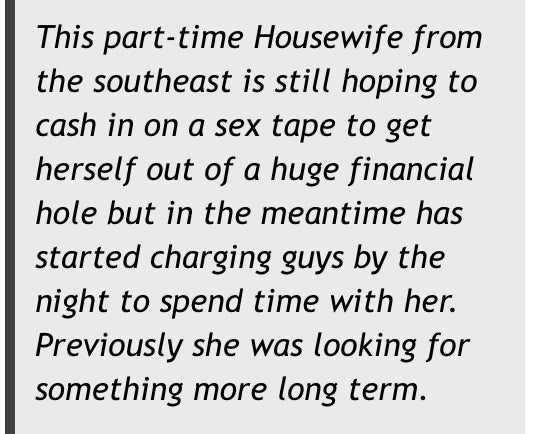
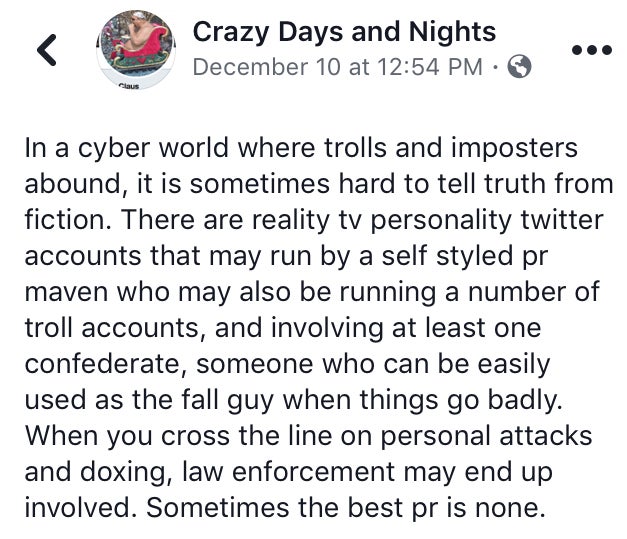
The popular website for blind items, Crazy Days and Nights, frequently drops hints. RealityTea.com shared this little tidbit from Crazy Days and Nights.

CRAZY DAYS AND NIGHTS FACEBOOK


(Originally published on Huffington Post) When blind items like these hit the Internet, readers scramble to figure out all possible allusions. Paragraphs that are so murky can be hard to solve…unless a reader is entirely familiar with the situations – and in the cases above, the reality showsIt is one thing to see oblique references on the Internet, but what about when targeted information about an individual is blasted out on social media platforms?


In recent times, we’ve seen it is an effective strategy for shaming those who are in the wrong, and getting that “news” out to the masses. In this post Harvey Weinstein world, the Internet has been an asset to enforcing the message that a certain type of conduct is intolerable. But what about when the Internet is used bythe Harvey Weinsteins to smear victimsPerpetrators of bad behavior are notorious for spreading lies and ensuring that they have a platform, spinning negative stories to feed the press in order to shift focus away from their own atrocities.


“The Internet is a void that everyone is screaming into,” my own father reasons, “Who in the world is listening?” It’s clear he doesn’t believe that many people are really taking lies they read as truths. The problem is that people very easily believe what they read in a blog established to malign someone without merit. We laugh at individuals who fall for National Enquirer headlines while on line at the grocery store, but we also easily witness how a false story takes off with alarming speed. And my father did not grow up with the Internet, nor does he rely on it for his work, unlike another man his age who sits in the oval office and has taken to Twitter in erratic fashion.

Covering reality television, I recently saw how fans escalate from discussing who their favorite characters are and trading barbs about what’s seen on TV…to hurling outlandish and abusive personalized attacks at one another.


“I said that I found Kenya Moore of Real Housewives of Atlanta to be frightening,” my friend David relates, “and suddenly I see tweets about me, including a poll, weighing in on how racist I am. I reiterate: The poll was about ME. Racist?!Because I happen to find a reality character frightening due to her intense behavior on a reality show?! How in the world did people make the stretch to ‘racist.’? I was trolled for months by these same multiple accounts. When I reported it to Twitter, an email came back saying that Twitter didn’t find the tweets abusive. I felt completely let down by the social media platform.”

A woman who chose to identify herself for this piece as “Carly” explained her similar vexations with Twitter: “I’m being taunted mercilessly by the same series of accounts because I dared to comment on a Real Housewives franchise. What ensued were below the belt tweets that included personal information about me. These sick individuals had apparently visited my other social media pages to check details. As a mom with a very young child, I was terrified and immediately set all my accounts to ‘private’. Everyone thought I was overreacting when I contacted a lawyer and asked family members to stay at my house for a few days. It’s insane that conversations via social media can lead to this much panic. I am still considering closing my Twitter, Instagram and Facebook accounts for good.”


Family members have also advised me to “get off social media” when I share anecdotes of that nether world. I think that due to the type of work I’ve conducted over the years, predominantly in the area of marketing, I have to be on these platforms (or maybe that’s just an excuse that serves as justification). In a non-professional capacity, I love to promote the good work of my friends. Facebook and Twitter are ideal for sharing a podcast link or one to an article. It does frighten me to see how fans blur the lines between reality and reality TV on Twitter though. It’s unlike anything I’ve ever witness in my life. It’s also quite the phenomenon that Real Housewives franchises specifically are the ones to garner this much negative attention and breed such a level of hostility between fans who simply want to opine on a silly television show.


Why do you think the Real Housewives inspire such a reaction in the Twitterverse?


Would you steer clear of social media if you were personally attacked?


If not, what measures would you take to protect yourself?


I would love to hear from you readers and get your individual takes. For now, try to remember that television viewing is typically described as “leisure time.” It is an experience you are supposed to enjoy and do so while you’re relaxing. Perhaps it is best to limit yourself to one screen and screen out the rest.


Standard
Uncategorized

STEP AWAY FROM THE SCREEN! (…Ah, well, at least for a bit)

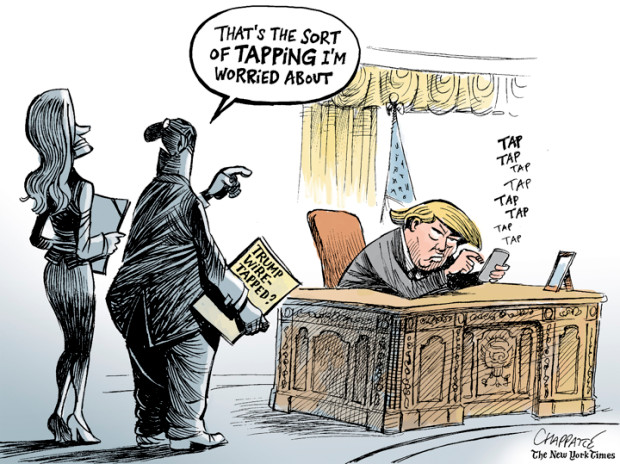
Patrick Chappatte / International New York Times

THE MERCURY NEWS, THE NEW YORK TIMES

(The following article originally ran on Huffington Post prior to the 2016 election. It has been revised to reflect the Internet age in 2018. Each day, the online world takes more steps towards evolving globally. There are pros and cons to this type of evolution. We take two of these steps forward and then two steps back, as you’ll read ahead.)

I need to begin by stating that I realize the ironies and hypocrisies in what I’m about to state. By beginning with the issue of “feeding the trolls,” I’m prostrating myself in cannibalistic fashion before the Temple of Internet Doom. However, I am going to address this very idea of the double standards we all live by.

When Donald Trump hits the keys of his computer, it’s a knee jerk reaction for so many of my friends to tweet back a reply. Despite this, we all realize his messages frequently serve as distractions from larger issues surrounding the presidency. If you are on Twitter and you follow those in the public eye, you’ve likely corresponded with them, replied to their tweets, or tweeted about them. It is human nature: We comment on the shows we watch, the news we read and the tweets we see. We are curious about others…Sometimes these are folks we’ve looked up to, are subsequently disappointed by, and then feel the need to express our dismay.

Some keep their statements on the Internet pithy, polite and  respectful, while others hurl personal attacks that have nothing to do with the subjects at hand. “Go fix your meth teeth!” was one off-topic comment directed my way by a total stranger. Incidentally, this was a direct response to my posting an interview with a comedian to Facebook.

This is a very weird time in American history. Do you remember those days when “secret ballots” were valued, when your parents never told you who they were voting for? I do. My mother felt it was best to leave the conversations of “who are you voting for” out of social gatherings, while managing to respond to friends thoughts on policies and perceived presidential successes and mishaps. Of course, the Internet was not around at that time. The concept of sharing a thought per minute (as the best Tweeters, Instagramers and Snapchaters do today) was a foreign one. Discourse, of course, existed in those dark ages but without the platform that made “thought after thought” and “play by play” acceptable. It was understood then that we kept many of the things we’re prone to  reveal today closer to our vests.

Several years ago, The National Jewish Outreach Program first promoted the idea of taking a weekend off – as orthodox Jews do when they keep the weekly Sabbath – from using all electronic communications. From sundown on Friday to sundown (plus three stars in the sky) on Saturday, Jews and non-Jews nationwide tried this out. Now, this may seem like a short amount of time to you, but if you’re as addicted to your phone as the majority of Americans are today, it is enough of a window to appreciate that you really CAN get by without texting, emailing, calling and checking.

You might miss a connection and the opportunity for last-minute plans, but you also see how freeing it is not having to worry about responding, being misconstrued when you post about politics or addressing people’s cynical and demanding questions. Yes, you can just put down the phone and like that, you cease to exist for a while in the digital world. You very well might open up your eyes to nature, other humans and all that is physically around you. Ironically, the head of Twitter took his own “electronics free” retreat recently. Users of his platform took to it to express their outrage with the message of: People are being maligned and bullied here and you’re taking a vacation?

When I responded to that Facebook creep who told me to fix my teeth, I just spurred him on further. My teeth are absolutely fine, so that didn’t hit a nerve. However, he did proceed to say a few other things… I’m not going to lie and say I’m not a sensitive person. I do think that there are many times when people’s comments can be cruel – and they know exactly how to fine-tune them so they are highly personalized. Comments can range from being bigoted, anti-Semitic, misogynistic to maniacally assassinating. The quality of one’s work can get ripped apart due to a perceived slight. Sometimes there are threats to meet you in person so you can see what that person is capable of in real life. I’ve read and seen talks of “death threats” on Twitter, but those are extreme and rare incidents.

The best and only thing you can do is keep doing. Keep writing, keep singing, keep acting, keep producing. Skeptics and cynics should serve to keep us on our toes, always humble and  striving to do things better. You can read the comments and filter out the constructive advice from the insults, even salvageable pointers buried under a heap of crude remarks. If you look for what you can learn from “trolls,” realize you are evolving and determined to deliver the best final product after many (or several) approximations.

And you do need your leisure time…Which is why it’s wise to consider taking the Internet sabbatical  mentioned above – at least for a few days.

When I address those in the public eye on Twitter (be it Real Housewives from Bravo or Donald Trump in the oval office), I’m guilty of the same thing I deplore, a form of trolling.While I’m not really sure anyone is paying attention, it’s also not like these celebrities have time to read and respond to my gripes. When they do, it’s surprising and I immediately feel regretful. I’m just commenting on what I see (whether it is on TV or via a news story), but how much am I impacting the world by weighing in on Twitter, Facebook or Instagram?

It is so tempting to respond to that which upsets and frustrates us. After all, we have a modern stage designed for those with grave “IRL” stage fright.

Sabbath from the screens may be just what the doctor ordered.


Standard
Uncategorized

Crazy Days and Nights: An Interview with the Elusive ‘Enty’, King of the Blind Item

CDAN

(This article was recently featured on my Huffington Post contributor site: https://www.huffingtonpost.com/author/sweiss-904)

A no-frills, anonymous gossip website has gotten to be the talk of Tinsletown…And New York…and so far beyond. Crazy Days and Nights (crazydaysandnights.net, commonly referred to as CDAN) has been around for over a decade and garners millions of page views per months. However, the site only recently came to my attention while I was following the outrageous behind-the-scenes drama of a reality show. Many viewers began to reach out to me and ask: “Have you seen this?” Whether the gossip seemed believable or completely far-fetched, I would end up perusing the CDAN blinds, eager to piece together the clues and figure them out.

I quickly learned that in 2017, CDAN had become more popular than ever before. It turns out that the website alluded to the Kevin Spacey, Harvey Weinstein and James Franco stories, bringing them to many readers’ attention well-before the accounts became news and #MeToo started trending.

Run by someone who refers to himself as “Enty”, a self-described entertainment lawyer, CDAN’s items are craftily created in a way that leaves you guessing and with a nagging sense of uncertainty. The items are so deliberately murky at times that you’re often wrong in your conjecture. If and when the timing is right, a CDAN blind gets its “reveal” – usually as the big event in Hollywood is happening, or just as the scandal is about to become news.

Once you start perusing the CDAN site, it can become awfully addictive, so consider yourself forewarned! You also quickly discover the competitor websites offering their own blind items (which in my opinion, are not as cleverly worded as CDAN’s). After recently noticing that a salacious post was removed from a CDAN competitor’s site, and subsequently hearing that site may have been served with a Cease and Desist as impetus for that removal, I had to wonder how Enty manages to avoid lawsuits himself.

According to Vanity Fair, https://www.vanityfair.com/style/2016/10/crazy-days-and-nights-enty-interview, CDAN has impressively evaded legal backlash in the years since its inception:

“Enty operates with the belief that he’s under minimal threat of legal repercussion, and he’s used to publicists turning a blind eye to his items. Therefore, he says, no celebrities are immune to being subjects on Crazy Days and Nights. Still, he has a code when it comes to the reveals process. He says he won’t out anyone, he won’t talk about people’s children, and he publishes kindness items about stars who do charitable acts sans publicity: “It’s this whole culture of, ‘Oh, I have to stay in front of the cameras,’” he says. “That’s the kinda behavior I really don’t like. That’s the kind of thing I expose.”

This isn’t uncommon. Each gossip site has its own unique set of rules for its own protection. Unlike Enty, Elaine Lui of LaineyGossip.com protects herself from litigation by never posting reveals and writing her blinds as riddles. “The reason they’re written as a riddle is a form of protection for the source and consequently myself,” Lui told Vanity Fair. Stars’ reps seem to have bigger fish to fry than the people posting the items—they’re just messengers, she reasons.”.

Since Enty is so incredibly elusive, I could only contact him via email. Following is our correspondence for The Huffington Post:


How did you come up with the idea for this site? My readers would love to know some background.

I was bored at work one day and realized I had some stories to share. I didn’t think anyone would actually read the site though.
What would you say is your rule for writing a blind?

Blind items have always been obscure. I’m sure each writer has their own way of writing them. With me, I like to make sure the clues are challenging enough for people. You don’t want it to be too easy. I also try to make it like a SAT question. There are several good choices, but there is only one correct choice.


The media recently highlighted that CDAN brought attention to the Weinstein & Spacey stories before they really made the news. Give me a sense of what it’s been like for Crazy Days And Nights in a post Weinstein era?

For the past 11 years, I have been writing blinds and telling stories about the people who do good in Hollywood, but also those that need to be exposed. That mission has been the goal from the first several months. I wanted people to see a side of the entertainment industry that you you never see in the supermarket kiss-butt tabloids. There is no way on this earth that any of those tabloids would do anything to endanger the access to celebrities they think they need to survive. I don’t care about access. I don’t care about getting some nothing interview about the release of a record or a movie that tells you nothing but what you have agreed to beforehand with multiple layers of bureaucracy surrounding the celebrity.


Who writes for Crazy Days and Nights besides Enty?

I have been writing the site from day one. One guy. If there is ever any other contributions, they are named, whether it be Mr. X or Himmmm. Even accounting for those two, I would guess that I have written about 99% of the approximate 60K posts.


What types of stories are you currently working on?

I don’t really work on stories in the sense of some type of timeline. I write about what I can dig up that day. If I don’t have enough information about a story or think there might be some more coming in about a topic, I might hold it to see, but there is no planning.


Which types of stories are garnering the most attention? Which get the least? What makes an enticing blind item today?

I think gossip readers each have the things they love the most. Some like Old Hollywood. Some like Kindness items (if a celebrity is involved with a charity or some good cause that they’re not public about). Some like items from the 80’s or 90’s. I really try and give a mix. The thing is to find not only the right blend, but also things that are juicy enough. I might get 100 tips a day, but maybe 75% are about people no one has heard of. That doesn’t mean I don’t hang on to them – in case they move up the list – but they need to be known so people have a chance of guessing. They also need to be interesting. So, out of those 100 tips, there might be 4 or 5 that make the lineup for the day combined with things I dig up on my own.


Do major news outlets and investigative journalists reach out to you for information after writing an item? If so, how do you handle their inquiries?

I get contacted a lot by reporters and news outlets. Some of my best friends are reporters or writers. They will often share things with me they don’t have enough sources to support or that their editors don’t want to run. A lot of those tips have been blockbusters which editors probably wish they had a second chance at.


How would you respond to the critics who say blind items are completely made up?

I can’t speak for other blind item sites, but I think that me revealing items on a daily basis for over a decade would show my blind items are real. I would also ask those same critics who write for tabloids how many times Jennifer Aniston was pregnant without having a baby. I would ask the critics who are publicists why they lie for their clients or make up stories that aren’t true.

Standard